Construction Background
The integration of UAVs and artificial intelligence is reshaping traditional industries and opening up brand‑new application scenarios. Equipped with AI chips, sensors and deep‑learning algorithms, UAVs have achieved a leap‑forward evolution from "remote‑controlled tools" to "autonomous decision‑making terminals". At the core‑technology level, AI endows UAVs with real‑time environmental perception capabilities, for instance, recognizing obstacles and tracking targets via computer vision, and realizing precise obstacle avoidance and path‑planning in complex scenarios combined with SLAM technology.In industrial applications, agricultural UAVs accurately monitor crop health through multispectral analysis; logistics UAVs optimize delivery routes with intelligent dispatching systems; security inspection UAVs can automatically identify abnormal behaviors and trigger early‑warning alerts. Notably, AI‑driven UAV swarm technology has been applied in disaster‑rescue missions. Multi‑UAV collaboration can rapidly construct 3‑D disaster‑situation models and improve search‑and‑rescue efficiency.
With the convergence of edge‑computing and 5G technologies, future UAVs will demonstrate stronger real‑time decision‑making capabilities in urban management, environmental protection and other fields. Meanwhile, they are confronted with challenges such as data privacy and airspace safety, calling for collaborative innovation in technical standards and regulations. The integration of UAV and artificial intelligence bears academic research significance across multiple disciplines and domains.For higher‑education institutions, given the advancement of UAV and AI technologies, cultivating interdisciplinary compound talents equipped with technical application capabilities and industrial domain knowledge has become a priority. Furthermore, in‑depth integration of artificial intelligence into university teaching will drive education to shift from "scale‑oriented" to "quality‑driven". Universities are required to implement systematic reforms in curriculum innovation, faculty development, achievement transformation and resource integration, and transform from "standardized teaching" to "targeted talent cultivation" according to individual student conditions.
The establishment of a UAV‑AI laboratory can boost technological R&D and innovation, cultivate interdisciplinary talents, build a practice platform for integration of industry and education, and accelerate breakthroughs in integrated UAV‑AI technologies. Meanwhile, it will fuel industrial upgrading and economic growth, and renovate education modes and scientific‑research systems. More than an infrastructure for technology R&D and talent training, it serves as a core hub connecting education, industry and scientific research. Its objective is to realize dual improvement of social productivity and innovation capacity through technology empowerment and ecological collaboration.
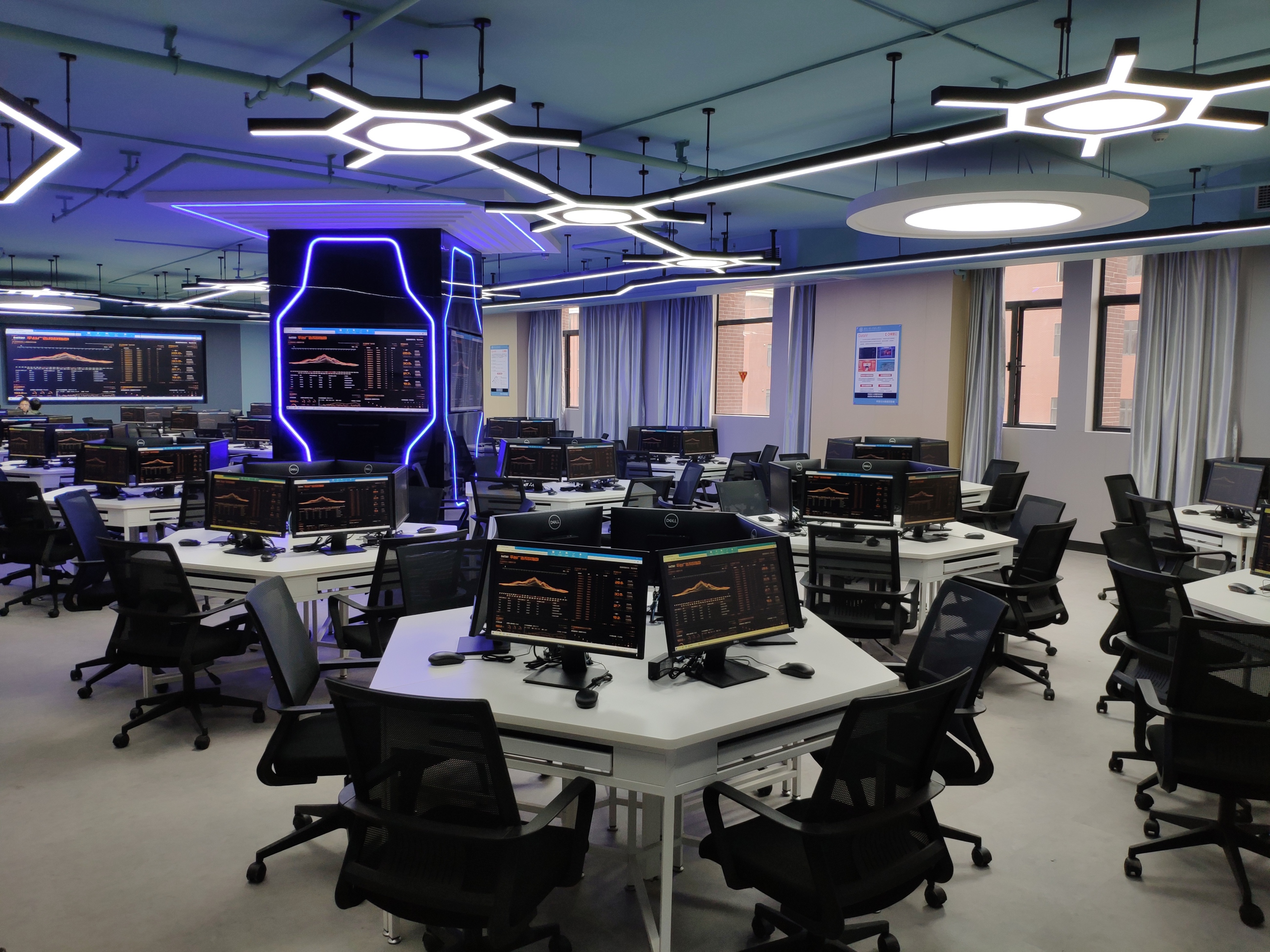
Overview of the AI+UAV Laboratory Solution for Higher Education Institutions
"Artificial Intelligence Plus (AI+)" is a concept and practice that deeply integrates artificial‑intelligence technologies with all industries to promote industrial transformation, upgrading and innovative development. Rather than merely applying AI to a specific field, it fully empowers and reconstructs traditional industries through technology integration and innovation.Machine vision is a fast‑growing branch of artificial intelligence, which enables measurement and judgment by machines instead of human eyes. Machine‑vision devices convert captured targets into image signals and transmit them to dedicated image‑processing systems to obtain morphological information of targets. Based on pixel distribution, brightness, color and other parameters, such information is converted into digital signals. The image system conducts various computations on these signals to extract target features, and then controls on‑site equipment according to discrimination results.
Focusing on AI technology research, application development and talent cultivation, the laboratory is furnished with advanced teaching‑training instruments to satisfy diverse demands for teaching, scientific research and competitions. UAVs carrying various sensors support data‑acquisition requirements. The data‑analysis and‑processing module is a cutting‑edge scientific‑research platform for big‑data value mining, incorporating distributed computing, machine‑learning and visual‑analysis technical systems.The laboratory adopts a four‑layer technical architecture: Acquisition‑Storage‑Computation‑Application. It is equipped with hybrid computing clusters, GPU training & inference servers and large‑capacity storage systems, supporting parallel processing of multi‑modal data including structured data, time‑series data and spatial data.
Main Functions
1. Understand the principles of distributed computing, edge computing and various chip architectures.
The full‑scenario intelligent teaching and training platform for distributed artificial intelligence covers major components of distributed‑AI systems, including terminal devices, edge devices, network devices and cloud‑end devices, supporting full‑scenario AI teaching, experiments and scientific research.
2. Meet teaching and experimental requirements for diverse scenarios.
Support teaching and experiments related to computer networks, distributed computing, high‑performance computing and edge computing.
‑ Realize training and optimization of AI models; support development, testing and deployment of various AI applications, as well as offline deployment and application of large‑language models.
‑ Terminal nodes conduct preliminary processing over collected data. Terminal devices include modules with ARM and RISC‑V chip architectures, supporting principle learning and programming development for chips of different architectures, fundamental Linux development, and deployment of basic AI models.
‑ When terminal‑node computing power cannot meet requirements, partial pre‑processed data will be handed over to edge nodes with stronger computing capacity. Edge nodes adopt JETSON Orin NX Super and Huawei Ascend architectures, enabling principle learning for multi‑architecture chips as well as development and deployment of sophisticated deep‑learning programs.
‑ Cloud‑end devices deliver high‑performance computing and storage modules. When terminal and edge computing power is insufficient, partial pre‑processed data can be processed on high‑performance cloud ends for model training and inference; local‑deployment solutions for large‑language models are provided.
‑ Cloud‑end devices also feature storage modules offering large‑capacity data storage accessible to all modules.
‑ Network devices mainly include routing modules, switching modules and management modules. Routing and switching modules realize inter‑connectivity among all modules; routing modules support secondary development and customized network‑environment configuration.
Unified Management Support
‑ The management module performs unified configuration and collaborative scheduling for all modules, and integrates a visual monitoring system. Occupancy metrics such as CPU, RAM and GPU usage of every module are displayed graphically on a single page.
‑ All modules support secondary development. Rich tutorial materials are provided for teaching, competitions and scientific‑research activities.
3. UAV sensor‑system development.
Intelligent equipment such as UAVs cannot function without sensor technologies. Students are expected to understand working principles and characteristics of diverse sensors, complete hardware‑and‑software development of sensor systems combining theoretical knowledge, and integrate relevant sensors with UAVs to realize expanded functions, so as to improve comprehensive development capabilities.
4. Inertial‑navigation‑system development.
An inertial‑navigation system is an autonomous navigation system that neither relies on external information nor radiates energy outward, enabling continuous positioning without satellite signals. Students can study relevant technical principles, develop practical hardware‑and‑software systems and integrate them with UAVs to enhance hardware‑software development capabilities.
5. UAV algorithm simulation.
Simulate UAV and artificial‑intelligence algorithms on computers to prevent UAV damage or personal injuries caused by defective programming.
6. Build artificial‑intelligence system environments.
Master environment setup for mainstream AI development and applications, and run common AI models for experimental purposes.
7. Understand environmental‑perception and sensor technologies.
Grasp technologies for intelligent environmental perception and sensors; conduct experiments on ROS and SLAM mapping technologies.
8. Master UAV‑AI related knowledge.
Acquire knowledge of artificial intelligence, deep learning and machine vision; study principles of UAV obstacle avoidance, navigation and target tracking and implement corresponding applications. Be familiar with configuration of ROS operating system and commonly‑used Linux commands.
9. Understand principles of UAV autonomous flight.
Understand and verify technical schemes and principles for UAV autonomous flight; conduct experiments on UAV control technologies.
10. Master swarm collaborative positioning and collaborative control.
Enable collaborative positioning among multiple UAVs, so that each drone in the swarm can accurately obtain mutual positional information, laying foundations for swarm collaborative flight and formation. Point‑to‑point inter‑UAV communication is supported. Any single UAV can acquire information from other units and control their flight, thus realizing complex tasks such as swarm cooperative flight and formation transformation.
